
Change in business is inevitable, but how people experience it is often misunderstood. Whether it’s a major transformation or a small shift in how work gets done, change can feel uncomfortable. That discomfort isn’t a sign of resistance or weakness; it’s a normal human response to uncertainty.
At Leadership Creativity, we’ve worked with many leaders and their teams to help them implement and manage change more effectively. What we’ve learned is simple: ‘People don’t respond to change at the same speed, in the same way, or with the same level of confidence.‘
The Change Curve: A Human Journey
Psychologist Elisabeth Kübler‑Ross first introduced the Change Curve which was adapted from the 5 stages of grief to describe how people emotionally process change. The change curve has been expanded over the years to show the 7 stages of how we process change: Shock, Denial, Frustration, Apathy, Experimentation, Decisions, Integration.
Shock: “Why is this happening?”, “How is this going to impact me and my role?” People may not believe it will happen, feel unsettled, numb, even paralysed.
Denial: People may refuse to accept that change will actually occur or it won’t affect them. Some may continue as if nothing has or will change.
Frustration: “I don’t know enough about this”, “Finding any information about what’s happening is hard” Emotions rise as routines are disrupted. Individuals may feel angry or allocate blame.
Apathy: The lowest point of the curve with the biggest impact on productivity. Morale and energy drop, emotions can be intense, people feel unmotivated, anxious or overwhelmed.
Experimentation: The turning point where people begin to accept that change is happening. “Maybe this could work.”, “I see some people are using the new systems” People start testing new ways or working.
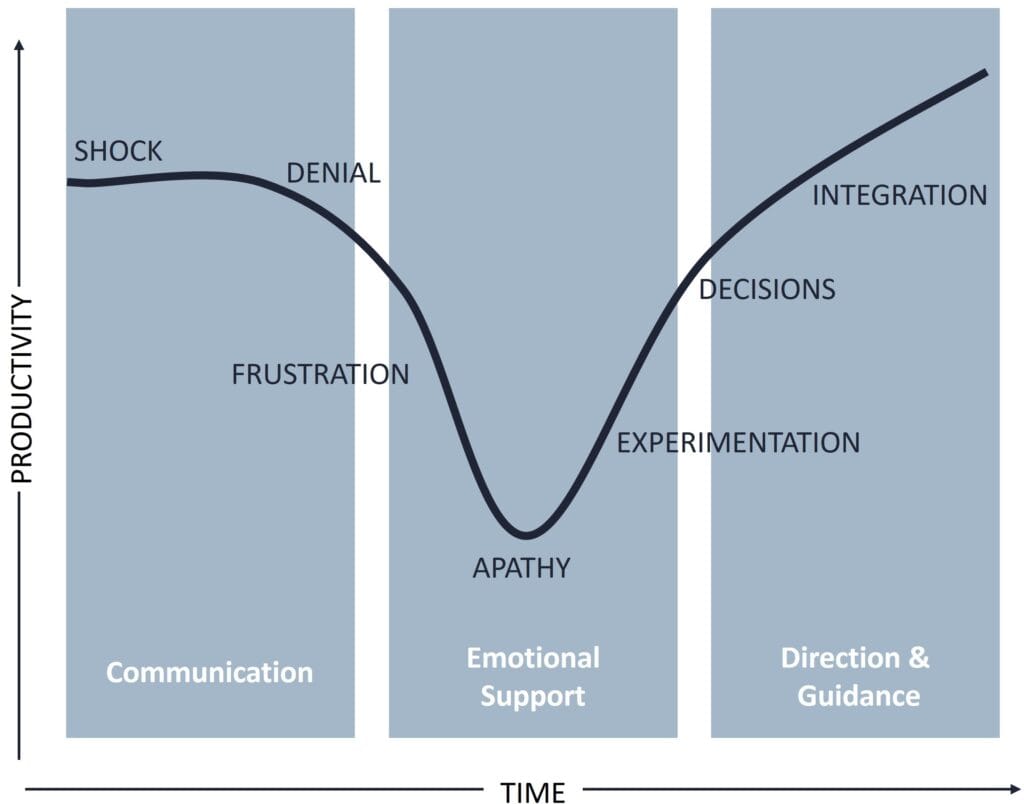
Decisions: Individuals are learning and making decisions around how to adapt and function in the new environment. “I’m feeling more positive”.
Integration: The final stage where “I can see the benefits.” The change is integrated into the new normal, confidence and engagement return.
Leaders who recognise these stages can respond with empathy and support rather than impatience. The goal isn’t to rush people through the curve, it’s to support them as they move through it.
Why Small Changes Can Create Big Reactions
Interestingly, it’s not always the big changes that trigger the strongest emotions. Sometimes it’s the small, unexpected adjustments that cause the most frustration:
- a change in a known system (like Apple rearranging email)
- a new, unannounced person coming into the team and disrupting the team dynamic
- or even a different type of pen in the stationery cupboard can be challenging!
An example Craig experienced some years ago was when a report was printed on different paper. The person receiving it completely rejected it as “not their report” simply because the paper was different. The content of the report was of course, exactly what they always received.
These micro‑changes disrupt habits and comfort zones, reminding people that control is shifting and uncertainty is challenging.
That’s why effective change leadership isn’t about pushing updates out to the team. It’s about supporting people through the transition, communicating early, checking in often, and creating space for questions and honest conversation.
Managing Resistance: Turning Pushback into Progress
Resistance is rarely about the change itself; it’s about how the change is experienced. People resist when they feel unheard, uncertain, or excluded. To manage resistance constructively:
- Listen to understand first. Understand what’s behind the concern by asking open-ended questions and listening closely to their responses
- Clarify the “why.” Explain the purpose and benefits clearly, think about ‘What’s in it for them’ rather than solely the benefits for the organisation
- Involve people early. Ownership and involvement can reduce anxiety.
- Acknowledge emotions. Show them you understand that they are struggling – validation builds trust.
- Celebrate small wins. When people can recognise their own progress, it reinforces confidence.
When leaders approach resistance with curiosity instead of frustration, they can transform it into valuable insight.
Growth on the Other Side of Discomfort
Change can be uncomfortable, but growth sits on the other side of that discomfort. When leaders understand the emotional side of change, they build a trustworthy team culture. When teams feel supported, they stay engaged, and when discomfort is acknowledged rather than ignored, people are far more likely to be open about it and grow through it.
If you’d like to discuss how we can support you and your team to lead through change, contact us now.