
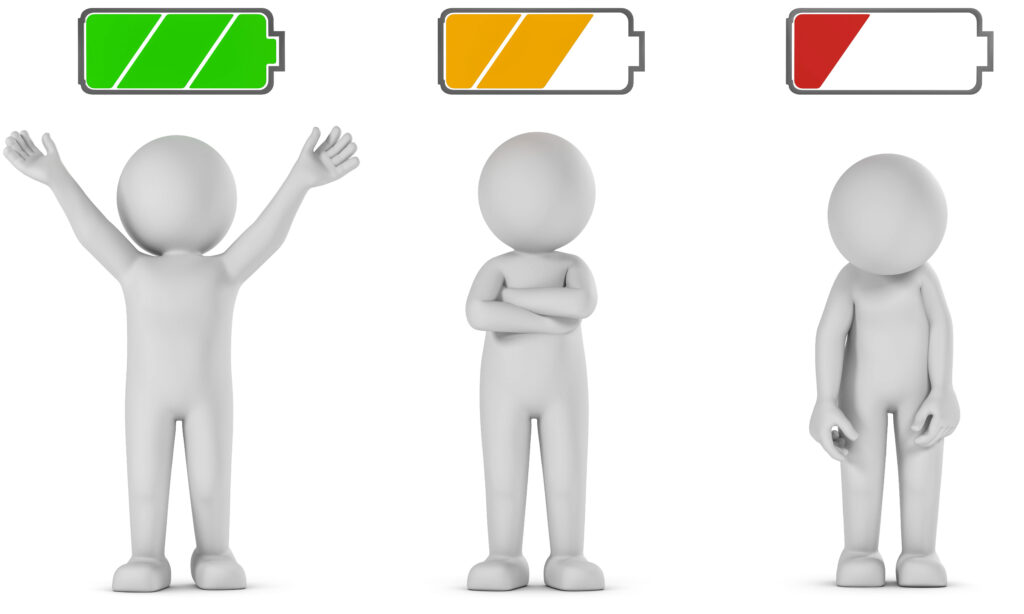
Leadership often looks steady from the outside. People see the composed decision maker, the resilient problem solver, the person who keeps moving even when the pace rises. Yet behind that exterior, many leaders carry a mental load that grows heavier by the week. High‑pressure roles demand clarity, emotional strength and constant focus. The reality is that even the strongest leaders reach a point where the load becomes too heavy. Leaders need to navigate mental health in high-pressure roles. Leadership does not make anyone invincible. It makes them human.
Recent months have been a reminder of this for Anna and Craig. Work has been intense, deadlines have been tight and expectations have been super high. Life outside of work has added its own pressures, including family health challenges and the simple fact that it has been far too long since either of them had a proper break. These experiences are not unique. Many business owners and leaders live through similar seasons, often without acknowledging the toll it takes. The mental strain builds quietly, and the signs appear long before burnout arrives.
Mental health challenges rarely announce themselves loudly. They creep in through subtle shifts that are easy to dismiss. Sleep becomes disrupted. Patience shortens. Focus becomes harder to maintain. Emotional exhaustion appears in moments that never used to feel difficult. Tasks that once felt manageable suddenly feel heavier than they should. Leaders often ignore these early indicators because they are conditioned to push through, stay composed and keep showing up for everyone else. High achievers are used to carrying more than most people realise (and tend to have soft boundaries where over-working is concerned). Recognising the signs early is essential for long‑term wellbeing.
The truth is simple. Leadership becomes significantly harder when the mental load is overflowing. Decision making slows, creativity all but disappears, confidence wavers and relationships strain. The culture around the leader absorbs the ripple effect. Teams feel the tension even when leaders try to hide it. A leader’s mental state influences the entire environment, and the impact is rarely contained to one person.
Spotting the symptoms in time to put in some self-care boundaries is rarely easy to do for yourself. We all need others to gently call out when we are showing signs of stress and pressure so we can make a call to change our approaches before we reach burnout. A quiet ‘are you ok?’ can help let the leader know they have support.
Where leaders need to provide this support to themselves, protecting their mental health begins with awareness. Leaders can look out for the symptoms that show when their internal system is under pressure. Some telltale signs for leaders are:
- Your energy level dips for an extended period, and you need more time to recover
- Your normal clarify blurs and yo have ‘brain fog’ more frequently
- Your normally considered & thought-out responses shift to emotional reactions
These shifts are not inconveniences. They are early warnings. They signal that the pace has become unsustainable and that something needs to change. Leaders who ignore these signs often find themselves in a cycle of exhaustion that becomes harder to break. Leaders who respond early regain control before the damage spreads.
Reclaiming wellbeing does not require dramatic changes. It requires intentional ones. Pausing long enough to breathe and reflect before reacting. Resetting boundaries that have become too loose. Asking for help instead of carrying everything alone. Adjusting workloads to match current capacity. Acknowledging that personal pressures influence professional performance.
Leaders often believe they must be the strongest person in the room. The truth is that strength comes from recognising limits, not denying them.
Leadership is not a performance. It is a human experience. Leaders who take care of themselves create environments where others feel safe to do the same. Leaders who model healthy behaviours encourage teams to speak up when they are struggling. Leaders who recognise their own stress patterns become better at noticing them in others. This awareness strengthens culture, improves communication and builds trust. A mentally healthy leader creates a mentally healthier team.
This month’s message is direct: Pay attention to the behaviours and patterns that signal rising stress, both in yourself and in the people around you. Notice when energy dips. Notice when clarity fades. Notice when reactions shift. These signs matter. They are invitations to pause, reflect and recalibrate. They are reminders that leadership is demanding and that no one can carry everything indefinitely.
If you see any of these signs in yourself or others, it is time to rethink your current workload and boundaries. It is time to place wellbeing at the top of the priority list rather than at the bottom. Leaders who take care of themselves lead with more clarity, more empathy and more strength. Leaders who protect their mental health create cultures where people feel supported, valued and safe. Leaders who recognise their humanity become better leaders.
If you or someone you know if struggling with mental health challenges you can contact these support organisations 24 hours / day:
Beyond Blue or call 1300 224 636
Lifeline or call 13 11 14 or text on 0477 13 11 14